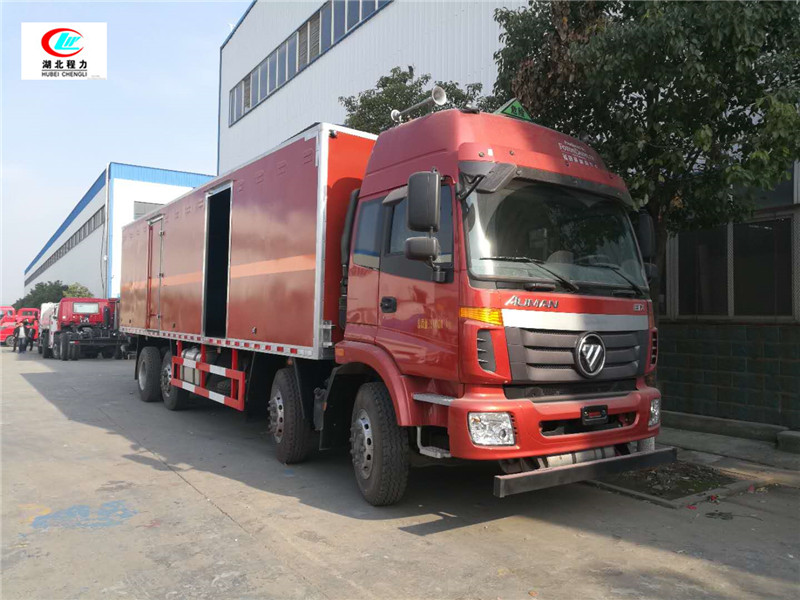
Note: While we have made every effort to ensure the accuracy of this product description based on currently available information, please note that vehicle specifications, configurations, materials, colors, and other details are subject to change at any time. Therefore, this product description is for reference only; the actual appearance, configuration, and color of the vehicle shall be determined by the physical vehicle at the time of sale.
The chemical liquid transport vehicles produced by our company are primarily used for transporting the following goods and media:
(FL-type vehicles) Class 3 flammable liquids: gasoline, diesel, kerosene, alcohol, methanol, formaldehyde, toluene, benzene, styrene, xylene, diisopropylamine, ethylbenzene, ethanol, ethylamine, diethyl ether, butyl acetate, ethyl acetate, propyl acetate (n-propyl), triethylamine, isobutylamine, isobutanol, isopropanol, aqueous acetone solution, aqueous isopropyl acetate solution, butanol, isobutyraldehyde, butyl ether, carbon disulfide, trichlorosilane, petroleum, crude oil, coal tar, naphtha, solvent oil, styrene, propanol, cyclohexane, propylene oxide, ethylene glycol, dimethylformamide, methyl acrylate, ethyl acrylate, vinyl acetate, methyl isobutyrate, heptane, dimethylamine solution, etc.
Four types of flammable self-igniting solids: molten sulfur
(OX-type vehicles) Five categories of strong oxidizing substances: hydrogen peroxide, potassium permanganate, hydrogen peroxide solution, ammonium nitrate solution, and combustible materials (including organic compounds calculated by carbon content) not exceeding 0.2%, with international hazard identification numbers UN2426, UN3098, etc.
(AT-type vehicles) Eight categories of corrosive materials: hypochlorite solution, hydrochloric acid, sulfuric acid, sodium hydroxide, potassium hydroxide, sodium hypochlorite, liquid alkali, ammonia water, hydrochloric acid, caustic soda, nitric acid, phosphoric acid, boric acid, aluminum chloride solution, hydrofluoric acid, formaldehyde, glacial acetic acid, acetic acid, acrylic acid, fluoroboric acid, propionic acid, hydrogen peroxide, ferric chloride solution, dichloromethane, fluorosilicic acid, trichloroacetic acid, hydroiodic acid, phthalic anhydride, maleic anhydride, titanium tetrachloride, chlorosulfonic acid, phosphorus trichloride, ethylenediamine, cyclohexylamine, etc.
Nine categories of miscellaneous hazardous materials: wastewater and waste containing copper, waste acids, waste alkalis, waste containing nickel, etc., as classified in the “National Hazardous Waste List,” with corresponding hazardous waste codes HW18, HW21, HW22, HW23, HW27, HW33, HW34, HW35, and HW46. Specifically, HW18 includes incineration residues from municipal solid waste incineration; HW21 covers dust generated during ferroalloy smelting from chromium-containing waste; HW23 refers to dust produced in metal surface treatment and heat treatment processes from zinc-containing waste; HW27 pertains to antimony-containing waste; HW47 involves dust generated in chemical raw material production from barium-containing waste; HW48 includes dust collected from non-ferrous metal mining and beneficiation processes in non-ferrous metal smelting waste; and HW49 covers dust collected by dust collection (removal) devices during production processes in the inorganic chemical industry under other waste categories.
General cargo: well cleaning fluids, fracturing fluids, water purification agents, water-reducing agents, cleaning agents, asphalt, hydraulic oil, edible oils, alcohol, milk, and various liquid foods.
Manufacturing process of chemical liquid transport vehicles:
Carbon steel tank:
The carbon steel tank body is made of high-quality steel plates from Wuhan Iron and Steel Corporation, manufactured in accordance with national standards.
2. The tank body employs advanced double-sided butt welding technology and undergoes high-pressure gas leak testing after forming, ensuring high strength, stable center of gravity, and safe, smooth vehicle transportation.
3. The carbon steel tank body and metal fittings undergo acid washing, phosphating, shot blasting, and electrophoretic treatment, followed by application of a high-molecular anti-corrosion primer and a high-quality, durable topcoat. This ensures strong adhesion, excellent corrosion resistance, uniform coating, and long-lasting bright color. The finish can withstand harsh environments such as humidity, dust, and salt spray, and will not crack, peel, or fade within a 5-year service period. This not only enhances the product’s aesthetic appeal but also effectively prevents rusting.
Plastic container:
The plastic tank body is made of modified polyethylene and formed in one piece using advanced rotational molding technology, resulting in a seamless, weld-free structure with high strength, no leakage, excellent corrosion resistance, and a long service life.
2. The plastic tank partition features a dual-sloped structure that securely locks in place, effectively preventing wave surges during transportation.
3. All attachments are secured with corrosion-resistant bolts and sealed with rubber gaskets.
Plastic-lined tank:
After the carbon steel tank is formed, perform a leak test (hydrostatic or pneumatic) on the tank first.
2. Spot weld the wire mesh steel to the inner surface of the tank and to the front and rear end caps.
3. Place the polyethylene white pellets or powder into the tank in a single batch, sufficient for forming a 16 mm thick rotational molding.
4. After curing, inspect using a spark tester and X-ray detector.
Due to their unique material properties and construction techniques, plastic-lined tanks offer excellent corrosion resistance and strength, making them the preferred material for chemical liquid transport vehicle tanks.
Aluminum alloy can:
1. The aluminum alloy tank offers excellent safety, corrosion resistance, economy, and environmental friendliness. The tanker features a rational structure, light self-weight, large loading capacity, anti-static properties, and complete oil unloading.
2. The tank is made of imported high-quality aluminum alloy sheets (magnesium-aluminum AL5083, AL5054, AL5454), with a dish-shaped head for excellent strength.
3. Top guardrail: The tank top is equipped with a pneumatic lifting guardrail, which is easy to operate and ensures the safety of personnel working on the tank top.
Bottom-loading system: enables both top filling and bottom loading, improving work efficiency and ensuring operator safety.
Vapor recovery system: enables internal circulation of oil vapors between tank trucks and storage tanks, preventing vapor leakage into the atmosphere, thus ensuring environmental protection and eliminating safety hazards at oil depots.
Overflow prevention system: During bottom loading, operators do not need to open the manhole to check whether the tank is full, ensuring that the tanker does not overflow due to overfilling during bottom loading.
Loading and unloading anti-escape system: Ensures that the vehicle remains automatically braked during loading and unloading operations until the valves and loading/unloading ports are fully closed, after which the brake is released. Effectively guarantees the safety of both the vehicle and the oil depot.
Multiple safety protection measures: Ensures the tank truck is safe and reliable, featuring imported explosion-proof manholes and emergency valves that prevent leakage even in the event of an accident, ensuring safety and environmental protection.
Connection assembly: The elastic connection between the superstructure and chassis effectively accommodates relative deformation, eliminating stress concentration. Even when traveling on rough roads, the superstructure of the tanker remains undamaged.
 English


![Jiefang Huan V front-four rear-six [20 cubic] flammable and corrosive goods tank transport vehicle](http://www.chengliautos.com/static/seazon/images/pro_bg1.webp)
![Jiefang Huan V front-four rear-six [20 cubic] flammable and corrosive goods tank transport vehicle](http://www.chengliautos.com/uploads/201803/19/20180319051649476.jpg)
![Jiefang Huan V front-four rear-six [20 cubic] flammable and corrosive goods tank transport vehicle](http://www.chengliautos.com/uploads/201803/19/20180319051649898.jpg)
![Jiefang Huan V front-four rear-six [20 cubic] flammable and corrosive goods tank transport vehicle](http://www.chengliautos.com/uploads/201803/19/20180319051649587.jpg)
![Jiefang Huan V front-four rear-six [20 cubic] flammable and corrosive goods tank transport vehicle](http://www.chengliautos.com/uploads/201803/19/20180319051650295.jpg)
![Jiefang Huan V front-four rear-six [20 cubic] flammable and corrosive goods tank transport vehicle](http://www.chengliautos.com/uploads/201803/19/20180319051651505.jpg)
![Jiefang Huan V front-four rear-six [20 cubic] flammable and corrosive goods tank transport vehicle](http://www.chengliautos.com/uploads/201803/19/20180319051651104.jpg)


![Jianghuai 4.2-meter miscellaneous hazardous materials box-type transport vehicle [Category 9]](http://www.chengliautos.com/uploads/201803/23/20180323044110217.jpg)
![Futong OMC 5.1-meter multi-purpose hazardous materials box-type transport vehicle [Category 9]](http://www.chengliautos.com/uploads/201803/23/20180323042952185.jpg)
![Jiangling 4.2-meter multi-purpose hazardous materials box truck [Category 9, Blue License Plate]](http://www.chengliautos.com/uploads/201803/23/20180323041114972.jpg)